
Hybridization between Schistosomes infecting humans and livestock – rare or rampant?

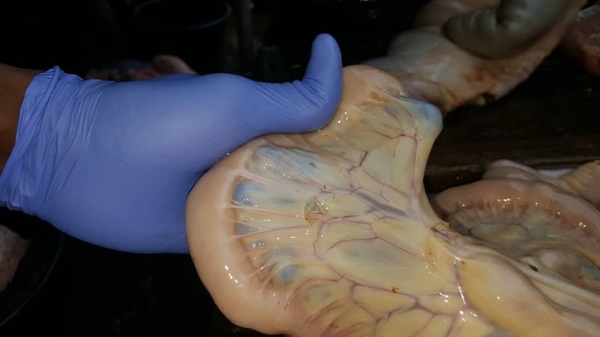
Examining mesentric veins of a cattle intestine for
Schistosoma bovis worms

Overview

Schistosoma haematobium, causative of urinary schistosomiasis in humans, and the related livestock parasite, Schistosoma bovis, readily mate in the laboratory and produce fertile offspring.

Furthermore, West African S. haematobium parasites carry S. bovis mtDNA suggesting that hybridization has occurred. But it is unclear if hybridization occurs commonly, and is epidemiologically important, or rarely, and important on an evolutionary timescale.

We are using a combination of population genomics and genetic crosses in the laboratory to better understand the genomic consequences, frequency and phenotypic effects of introgression in this parasite system.

Representative Papers

  • Platt, Roy N, Marina McDew-White, Winka Le Clec’h, Frédéric D Chevalier, Fiona Allan, Aidan M Emery, Amadou Garba, et al. (2019) 2019. “Ancient Hybridization and Adaptive Introgression of an Invadolysin Gene in Schistosome Parasites.”. Molecular Biology and Evolution 36 (10): 2127-42. https://doi.org/10.1093/molbev/msz154.

    Introgression among parasite species has the potential to transfer traits of biomedical importance across species boundaries. The parasitic blood fluke Schistosoma haematobium causes urogenital schistosomiasis in humans across sub-Saharan Africa. Hybridization with other schistosome species is assumed to occur commonly, because genetic crosses between S. haematobium and livestock schistosomes, including S. bovis, can be staged in the laboratory, and sequencing of mtDNA and rDNA amplified from microscopic miracidia larvae frequently reveals markers from different species. However, the frequency, direction, age, and genomic consequences of hybridization are unknown. We hatched miracidia from eggs and sequenced the exomes from 96 individual S. haematobium miracidia from infected patients from Niger and the Zanzibar archipelago. These data revealed no evidence for contemporary hybridization between S. bovis and S. haematobium in our samples. However, all Nigerien S. haematobium genomes sampled show hybrid ancestry, with 3.3-8.2% of their nuclear genomes derived from S. bovis, providing evidence of an ancient introgression event that occurred at least 108-613 generations ago. Some S. bovis-derived alleles have spread to high frequency or reached fixation and show strong signatures of directional selection; the strongest signal spans a single gene in the invadolysin gene family (Chr. 4). Our results suggest that S. bovis/S. haematobium hybridization occurs rarely but demonstrate profound consequences of ancient introgression from a livestock parasite into the genome of S. haematobium, the most prevalent schistosome species infecting humans.